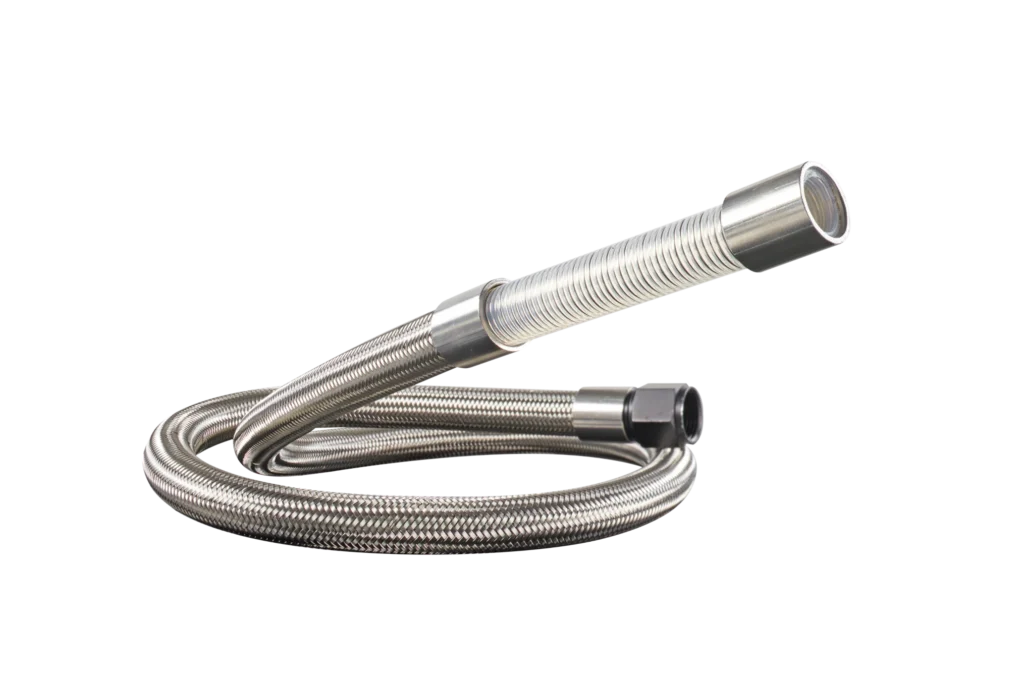

Why PTFE Fuel Hose Is the Best Choice for E85 Fuel Systems
As performance vehicles continue to evolve, more enthusiasts, race teams, and OEM manufacturers are turning to E85 fuel to unlock increased power and improved engine performance. With its high ethanol content and excellent knock resistance, E85 has become a popular fuel choice for turbocharged, supercharged, and high-performance engines.
However, while E85 offers significant performance advantages, it also places greater demands on the components within the fuel system, particularly the fuel hose assemblies responsible for transporting fuel throughout the vehicle.
Choosing the wrong fuel hose material can lead to premature deterioration, fuel contamination, leaks, and costly repairs. This is why many engineers and performance specialists now specify PTFE fuel hose over traditional rubber hose for E85 applications.
In this article, we compare PTFE fuel hose and rubber fuel hose when used with E85 fuel, highlighting the advantages and disadvantages of each material and explaining why PTFE has become the preferred solution for demanding automotive applications.
What Is E85 Fuel?
E85 is a high-ethanol fuel blend containing up to 85% ethanol and 15% petrol (gasoline), although the exact percentage can vary depending on climate and seasonal requirements.
It is commonly used in:
- Performance road cars
- Motorsport applications
- Turbocharged engines
- Flex-fuel vehicles
- High horsepower builds
- Engine tuning projects
The main benefits of E85 include:
- Higher octane rating
- Increased resistance to engine knock
- Lower combustion temperatures
- Potential for increased engine power
- Renewable fuel content
While these benefits make E85 highly attractive, ethanol behaves differently from conventional petrol and is considerably more aggressive towards certain fuel hose materials.
Why Fuel Hose Material Matters
The fuel hose is one of the most critical components within any fuel delivery system. Selecting the correct fuel hose material helps ensure reliable fuel delivery, long service life, and safe vehicle operation.
A fuel hose must safely withstand:
- Constant fuel exposure
- Pressure fluctuations
- Engine bay temperatures
- Vehicle vibration
- Chemical attack
- Long service intervals
When using E85, chemical compatibility becomes even more important.
Unlike conventional petrol, ethanol can gradually attack certain elastomers and rubber compounds, reducing the performance of a fuel hose over time.
PTFE Fuel Hose vs Rubber Fuel Hose
Although both hose types are widely used in automotive applications, they perform very differently when exposed to ethanol-based fuels.
PTFE Fuel Hose
PTFE is a high-performance fluoropolymer widely used to manufacture fuel hose assemblies for demanding automotive and motorsport applications.
Advantages of PTFE Fuel Hose
- Outstanding resistance to ethanol and E85 fuel
- Excellent chemical compatibility
- Extremely low fuel permeation
- High temperature resistance
- Excellent pressure capability
- Long service life
- Resistant to hardening and cracking
- Does not absorb fuel
- Resistant to ageing
- Ideal fuel hose solution for E85, flex-fuel and high-performance fuel systems
- Suitable for motorsport and high-performance applications
Because PTFE is chemically inert, it remains stable even after prolonged exposure to aggressive fuels.
Potential Considerations
Although PTFE offers excellent performance, there are some factors to consider:
- Higher initial purchase cost
- Requires the correct fittings during assembly
- Slightly less flexible than traditional rubber hose
- Professional assembly is recommended for many applications
However, these considerations are often outweighed by the long-term reliability and durability that a quality PTFE fuel hose provides.
Rubber Fuel Hose
Rubber fuel hose has been used in automotive fuel systems for decades and remains suitable for many standard petrol applications.
Advantages of Rubber Fuel Hose
- Lower purchase cost
- Flexible installation
- Simple to route through confined spaces
- Suitable for many standard fuel systems
- Widely available
For conventional petrol vehicles operating under normal conditions, quality rubber fuel hose can still perform well.
Disadvantages of Rubber Fuel Hose with E85
When exposed to high-ethanol fuels, rubber hose may experience:
- Swelling
- Hardening
- Cracking
- Fuel permeation
- Reduced flexibility
- Internal degradation
- Shorter service life
- Increased maintenance requirements
Not all rubber compounds respond in the same way, but prolonged exposure to ethanol-based fuels can significantly reduce the lifespan of many conventional fuel hose products.
Fuel Permeation – An Often Overlooked Factor
One of the biggest advantages of a PTFE fuel hose is its extremely low fuel permeation.
Fuel permeation refers to fuel vapours gradually passing through the hose wall.
Excessive permeation can result in:
- Fuel odours
- Increased emissions
- Fuel loss
- Garage smells
- Environmental concerns
A PTFE fuel hose provides an excellent barrier against fuel vapours, making it particularly attractive for enclosed engine bays and performance vehicles.
Temperature Performance
Modern engines generate considerable heat.
Turbocharged and motorsport applications place even greater demands on fuel hose assemblies.
PTFE performs exceptionally well across a wide temperature range, maintaining its properties where some rubber compounds begin to deteriorate.
This makes PTFE ideal for:
- Turbocharger fuel systems
- High-performance road cars
- Motorsport vehicles
- Competition engines
- Track-day applications
Reliability in Motorsport
Reliability is everything in motorsport.
A failed fuel hose can end a race or, more importantly, create a serious safety hazard.
Many professional motorsport teams specify PTFE fuel hose because it offers:
- Consistent performance
- Excellent chemical resistance
- High pressure capability
- Outstanding durability
- Long service intervals
While the initial investment may be higher, the reduction in maintenance and improved reliability often make PTFE the more cost-effective solution over time.
Choosing the Right Fuel Hose for Your Application
Choosing the correct fuel hose depends on several factors, including:
- Fuel type
- Operating pressure
- Temperature
- Vehicle application
- Installation environment
- Required service life
If the vehicle is running standard petrol in a conventional road application, quality rubber fuel hose may be perfectly adequate.
However, if the system uses:
- E85
- High ethanol fuel blends
- Performance fuel systems
- Turbocharged engines
- Motorsport applications
A PTFE fuel hose is generally the preferred long-term solution.
How APT Systems Supports Automotive Fuel Systems
At APT Systems, we supply high-performance PTFE fuel hose solutions for demanding automotive and motorsport applications.
Our Automotive Division supports customers requiring reliable fluid transfer solutions for:
- E85 fuel systems
- Motorsport applications
- Performance vehicles
- Turbocharged engines
- Hybrid and specialist vehicles
Alongside PTFE fuel hose products, we also supply high-quality silicone hose solutions and work closely with customers to help specify the most appropriate products for each application.
Whether you’re building a competition car, upgrading a performance vehicle, or designing a specialist automotive system, we can provide technical advice and high-quality hose solutions to support your project.
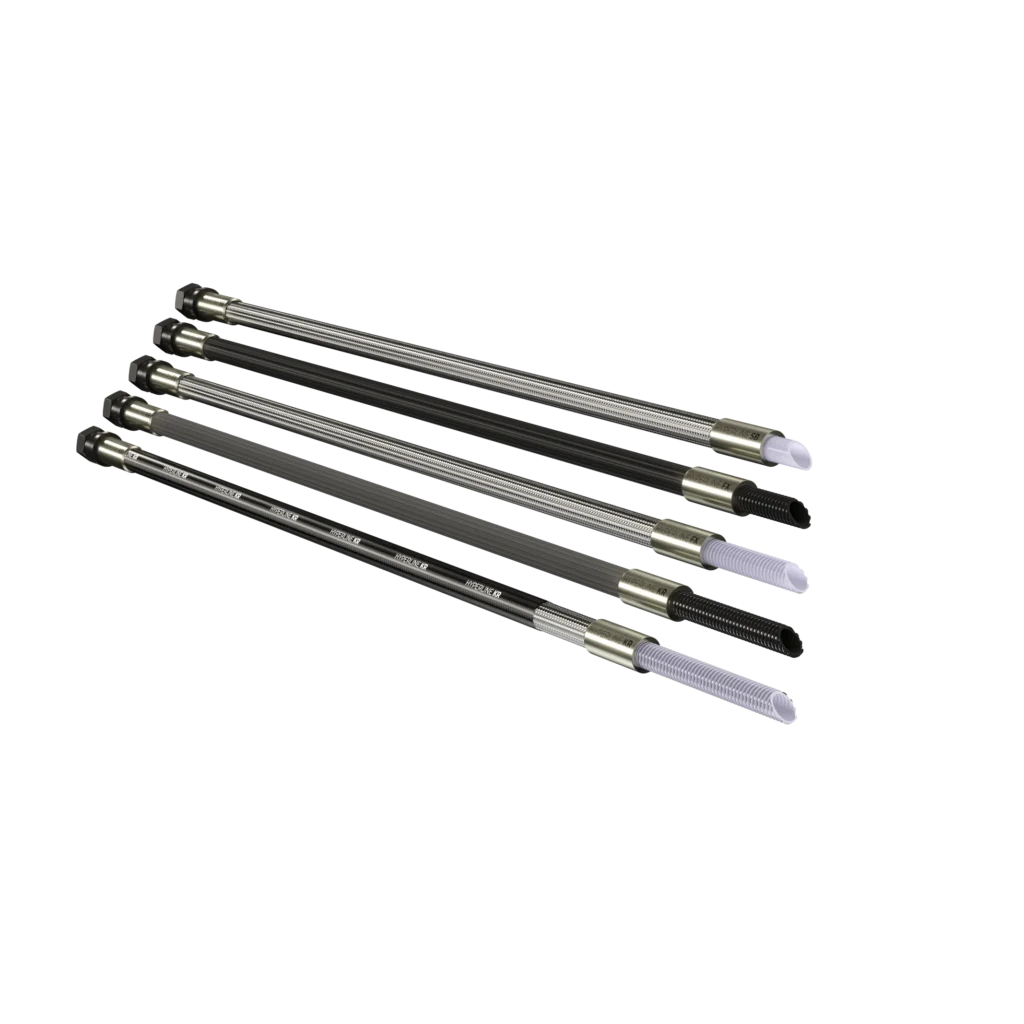
E85 fuel delivers excellent performance benefits but also demands more from the components within the fuel system.
While traditional rubber fuel hose remains suitable for many standard petrol applications, prolonged exposure to ethanol-rich fuels can accelerate ageing, fuel permeation, and material degradation.
PTFE offers outstanding chemical resistance, exceptional durability, minimal fuel permeation, and excellent temperature performance, making it the preferred choice for E85, flex-fuel, and high-performance automotive applications.
For engineers, performance vehicle builders, and motorsport teams looking to maximise reliability, investing in a quality PTFE is an investment in long-term performance, safety, and peace of mind.