Different Types of Silicone Rubber Used in Hose Manufacture
Silicone hose is used across a wide range of industries, from automotive and marine applications to food processing and pharmaceutical manufacturing. It is often recognised for its flexibility, temperature resistance and range of available colours.
However, colour is only one part of the picture. The silicone compound used to manufacture a hose can have a significant impact on its performance, chemical compatibility and suitability for a particular application.
There are several types of silicone rubber, each developed to meet different requirements. In this article, we look at four materials used in hose manufacture: FVMQ, VMQ, OAT-compatible silicone and platinum-cured silicone.
Understanding the differences can help when selecting a hose for a specific operating environment.
What Makes Silicone Suitable for Hose Manufacture?
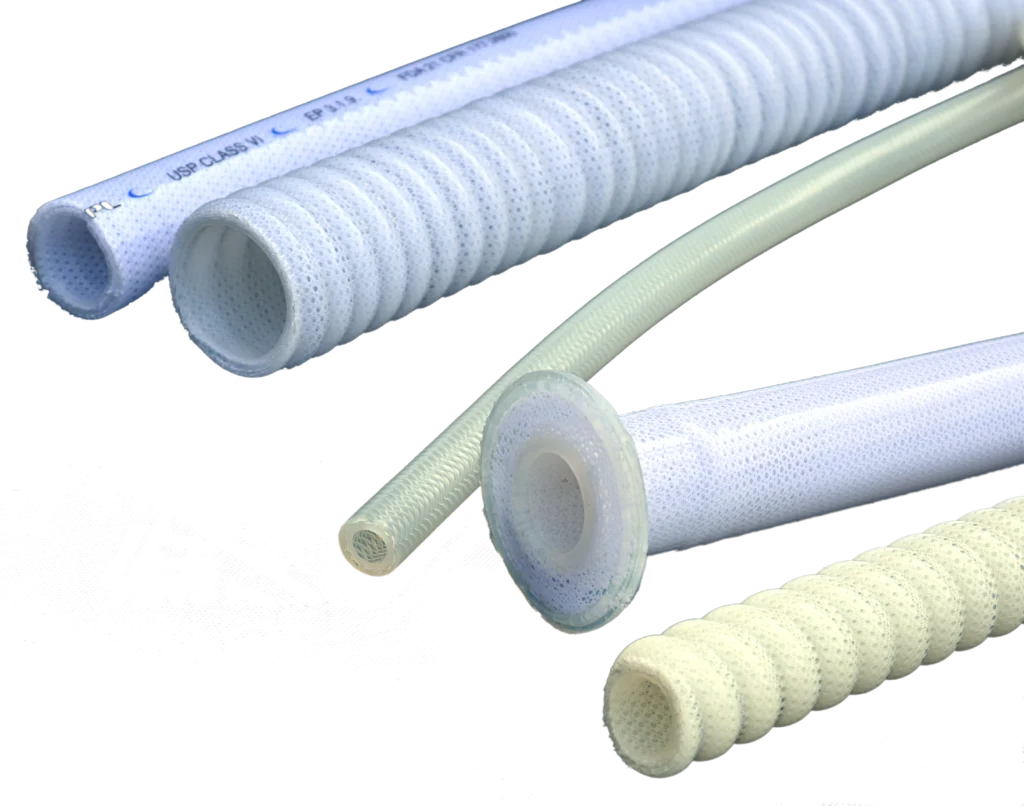
Silicone rubber is valued for its flexibility and ability to perform across a broad temperature range. It can also offer good resistance to ageing and weathering, making it suitable for applications where hoses are exposed to heat, vibration or changing environmental conditions.
Depending on the compound and hose construction, silicone hoses can be used to transfer air, coolant and other compatible media.
The performance of a finished hose depends on more than the base material. Factors such as reinforcement, wall thickness, temperature, pressure and the media being conveyed all need to be considered.
Choosing the right compound is therefore an important step in selecting a hose that will perform reliably in service.
1. FVMQ – Fluorosilicone Rubber
FVMQ, commonly known as fluorosilicone, is a fluorinated variant of silicone rubber. It is designed to provide improved resistance to certain fuels, oils and chemicals compared with standard silicone compounds.
This makes it useful in applications where conventional silicone may not provide the required compatibility.
Key characteristics
FVMQ can offer:
- Improved resistance to selected fuels and oils.
- Good flexibility across a broad temperature range.
- Suitability for certain demanding automotive and aerospace applications.
- A barrier material for applications where media compatibility is a key concern.
Because fluorosilicone is a relatively expensive compound, it is often used selectively rather than throughout the entire hose. For example, it may be used as an inner liner or barrier layer, while other materials provide the remaining structure and reinforcement.
This approach can help provide the required resistance to the conveyed media while managing material costs.
Where is FVMQ used?
FVMQ may be considered for applications involving exposure to fuels, oils or hydraulic fluids, including certain automotive and aerospace components.
It is important to confirm compatibility with the specific fluid, concentration, temperature and operating conditions. Not all fuels, oils or chemical mixtures behave in the same way, so the compound should be selected against the actual application.
2. VMQ – Silicone Rubber Commonly Used in Hose Manufacture
VMQ is a general designation for silicone rubber. In hose manufacture, peroxide-cured silicone is one commonly used form.
Compared with fluorosilicone, VMQ is generally more competitively priced and can be suitable for applications where flexibility, temperature performance and resistance to ageing are important, but enhanced fuel or oil resistance is not required.
It is often used as the main body of a silicone hose.
Key characteristics
Depending on the formulation, VMQ silicone can offer:
- Good flexibility.
- Resistance to heat and ageing.
- Suitability for a range of coolant and air applications.
- A practical balance of performance and cost.
VMQ is widely used in automotive, marine, rail and power-generation applications, including coolant and charge-air systems.
What should you consider?
VMQ should not be assumed suitable for every fluid simply because it is silicone. Its compatibility depends on the specific compound and the conditions in which it will be used.
For example, a hose designed for coolant or charge air may not be appropriate for fuel transfer. Always check the manufacturer’s compatibility information and the hose’s intended application.
3. OAT – Organic Acid Technology Coolant
OAT stands for Organic Acid Technology. It is a type of coolant formulation developed to address some limitations of older Inorganic Acid Technology (IAT) coolants.
OAT coolant uses organic-acid-based corrosion inhibitors and is commonly found in modern vehicle cooling systems. Its formulation is designed to provide corrosion protection and support the requirements of newer cooling-system designs.
For hose selection, the key point is that the coolant itself forms part of the operating environment. A hose must be compatible with the specific coolant formulation, not simply with water or glycol in general.
Why does coolant type matter?
Modern cooling systems may use different coolant technologies depending on the vehicle or equipment manufacturer. These formulations can vary in their additives and chemical characteristics.
When selecting a silicone hose for a cooling circuit, consider:
- The exact coolant specification.
- The operating temperature.
- The pressure and system design.
- The hose compound and its stated compatibility.
- Any requirements set by the equipment or vehicle manufacturer.
OAT is a coolant technology, rather than a separate type of silicone rubber. It is included here because coolant chemistry is an important consideration when choosing a hose for modern cooling systems.
4. Platinum-Cured Silicone
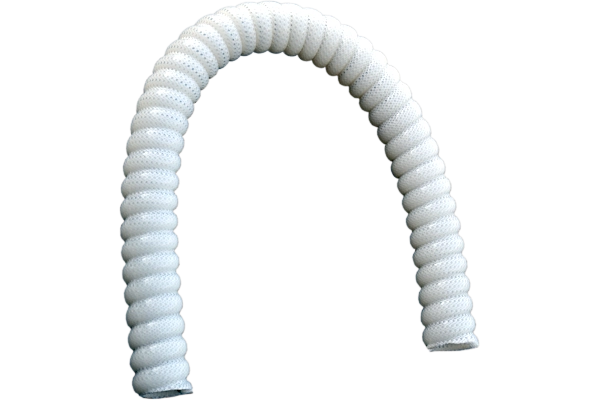
Platinum-cured silicone is a high-purity form of silicone rubber manufactured using a platinum curing system.
It is commonly selected for applications where cleanliness, low levels of extractables and consistent material properties are important. Compared with peroxide-cured silicone, platinum-cured silicone can offer lower levels of certain cure-related residues, depending on the formulation and manufacturing process.
Key characteristics
Platinum-cured silicone may offer:
- High purity for suitable applications.
- Low levels of certain extractables and leachables.
- Good clarity and appearance.
- Good heat resistance and material stability.
- Suitability for selected food, pharmaceutical and bioprocess applications.
It is widely used in applications such as medical devices, food-contact products and pharmaceutical processing, where material purity and product compatibility are important.
However, platinum-cured does not automatically mean a hose is approved for every food, medical or pharmaceutical application. Suitability depends on the finished hose, its construction, manufacturing controls and the relevant certification or compliance requirements.
Where is platinum-cured silicone used?
Platinum-cured silicone hose may be used in food and beverage processing, pharmaceutical manufacturing and other applications where a high-purity material is required.
For these applications, it is important to review the specific product documentation, including any applicable food-contact declarations, biocompatibility information or regulatory compliance statements.
Comparing the Four Materials
Material | Main characteristic | Typical application considerations |
FVMQ | Improved resistance to selected fuels, oils and chemicals | Fuel- or oil-exposed components; may be used as a liner or barrier |
VMQ | General-purpose silicone rubber with good flexibility and heat performance | Coolant and charge-air systems where the compound is compatible |
OAT coolant | Coolant technology using organic-acid-based corrosion inhibitors | Relevant when checking hose compatibility with a specific cooling system |
Platinum-cured silicone | High-purity silicone with low levels of certain cure-related residues | Food, pharmaceutical and other applications with purity requirements |
These materials are not interchangeable. The correct choice depends on the media, operating conditions and requirements of the finished hose.
How to Choose the Right Silicone Hose
When specifying a silicone hose, start with the application rather than the colour or material name alone.
Consider the following:
- What media will the hose carry? Confirm the exact fluid, including any additives or cleaning chemicals.
- What temperature will it experience? Consider both normal operating temperature and any short-term peaks.
- What pressure will it operate under? Check the hose’s pressure rating and construction.
- Does the application have purity or compliance requirements? Food, pharmaceutical and medical applications may require specific documentation.
- Is reinforcement required? The hose construction must suit the pressure, vacuum and mechanical demands of the system.
- What does the manufacturer specify? Use the product’s technical information to confirm suitability for the intended application.
A hose that performs well in one system may not be suitable for another, even if both use silicone.
How APT Systems Can Help
APT Systems manufactures silicone and PTFE hose for a range of automotive, food and pharmaceutical applications.
Our team can help you identify the hose type and specification relevant to your requirements, considering the media, operating conditions and any applicable compliance needs.
We can support customers with technical advice, quotations and product supply. Installation is carried out by the customer or their appointed contractor.
That final point is particularly important.
An anti-static hose does not operate in isolation. The hose assembly needs to be correctly specified, assembled and connected into a suitable grounding path.
Silicone hose compounds are developed to meet different application requirements. FVMQ can provide improved resistance to selected fuels and oils, VMQ is commonly used in coolant and charge-air applications, OAT describes a coolant technology, and platinum-cured silicone is often selected where purity is a priority.
The important point is that the right hose depends on the application, not simply on the material name or colour.
If you are selecting silicone hose for an automotive, food or pharmaceutical system, APT Systems can help you review the requirements and identify a suitable product.