How Cooling System Failures Cause Costly Downtime in Automotive Applications
In modern automotive manufacturing and vehicle operation, cooling systems are no longer simple supporting components. They are mission‑critical systems that directly impact reliability, efficiency, and uptime. From internal combustion engines to hybrid and fully electric vehicles, effective thermal management is essential to protect engines, batteries, power electronics, and auxiliary systems.
For automotive OEMs, Tier 1 suppliers, and fleet operators, cooling system failures can lead to unplanned downtime, expensive repairs, warranty claims, and reputational damage. Many of these failures trace back to weaknesses in hoses, connectors, and assemblies that are exposed to thermal cycling, vibration, connector stress, and severe packaging constraints.
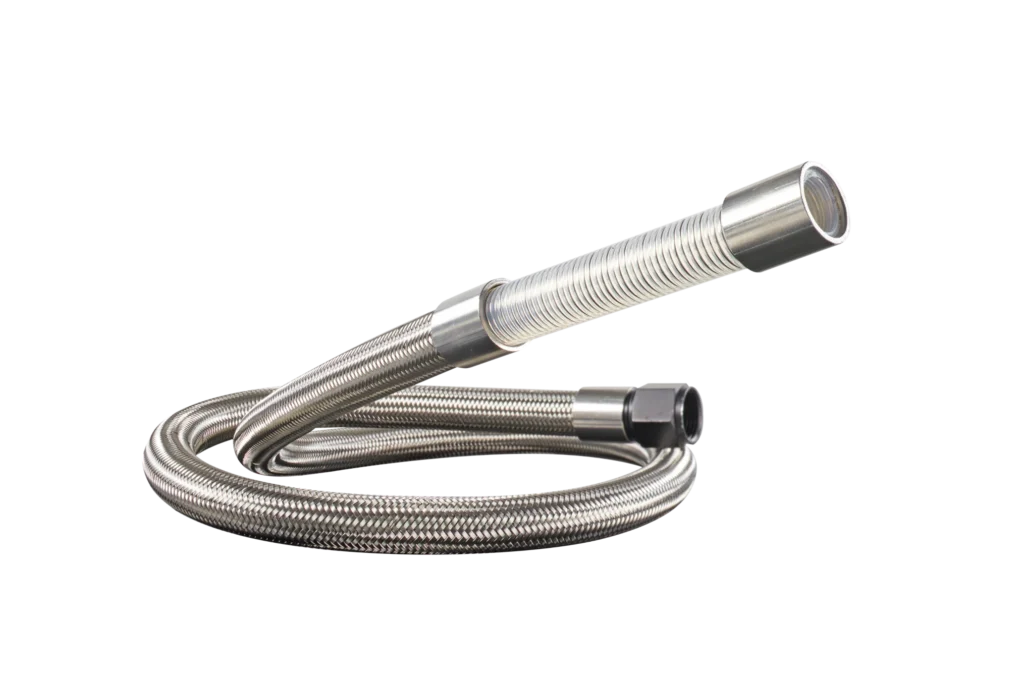
At APT Systems (Advanced Pressure Transfer Systems), our automotive division specialises in high‑performance silicone and PTFE hose solutions engineered to withstand the harsh realities of automotive cooling environments. In this article, we explore how cooling system failures occur, why they are so costly, and how robust hose design can significantly reduce downtime.
The True Cost of Cooling System Downtime in Automotive Applications
Cooling system downtime impacts far more than just repair budgets. When a cooling failure occurs, the consequences often include:
- Production line stoppages in manufacturing environments
- Vehicle breakdowns leading to recovery and repair costs
- Engine or battery damage due to overheating
- Lost productivity in commercial and fleet vehicles
- Warranty claims and customer dissatisfaction
Even a relatively minor hose or connector failure can escalate rapidly if it leads to coolant loss, thermal runaway, or component damage. Understanding the root causes of these failures is the first step in preventing them.
Thermal Cycling: A Silent but Destructive Force
What Is Thermal Cycling?
Thermal cycling refers to the repeated heating and cooling of components during normal vehicle operation. In automotive cooling systems, hoses can experience wide temperature swings—from cold starts below freezing to sustained high‑temperature operation.
Over time, these cycles place enormous stress on materials, particularly at joints, bends, and connection points.
How Thermal Cycling Causes Hose Failure
- Material fatigue caused by repeated expansion and contraction
- Hardening or cracking of low‑quality elastomers
- Loss of sealing integrity at connectors and clamps
- Delamination in multi‑layer hose constructions
Silicone hoses offer excellent resistance to thermal cycling due to their flexibility and stability across a wide temperature range. PTFE hoses, meanwhile, excel in extreme temperature environments where chemical resistance and dimensional stability are critical.
APT Systems engineers cooling hoses specifically to maintain performance despite thousands of thermal cycles, significantly extending service life.
Vibration: Constant Motion, Constant Stress
Why Vibration Is a Major Risk
Automotive environments are inherently dynamic. Engines, electric motors, road conditions, and chassis movement all generate continuous vibration. Cooling system hoses must absorb this motion while maintaining pressure integrity and sealing performance.
Vibration‑Induced Failure Modes
- Abrasion against surrounding components
- Micro‑cracking at stress concentration points
- Clamp loosening and fretting
- Connector fatigue leading to leaks or blow‑off
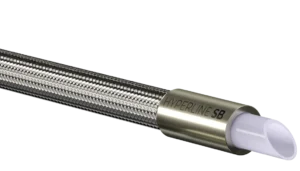
Inadequately supported or poorly routed hoses are especially vulnerable. High‑performance silicone hoses provide flexibility and vibration damping, while reinforced PTFE hose assemblies offer exceptional durability in high‑pressure, high‑vibration environments.
APT Systems designs hose assemblies with reinforcement layers, tailored bend radii, and precise end‑fittings to minimise vibration‑related failures.
Connector Failure: The Weakest Link in the System
Why Connectors Fail First
In many cooling system failures, the hose itself is not the primary issue—the connector is. Connectors experience combined stresses from:
- Thermal expansion and contraction
- Mechanical vibration
- Clamp pressure
- Installation misalignment
Over time, these forces can compromise seals and cause leaks, even if the hose material remains intact.
Common Connector Failure Causes
- Mismatched hose and connector materials
- Insufficient retention or bead design
- Improper clamp selection or torque
- Restricted movement due to tight packaging
APT Systems takes a system‑level approach, ensuring hose, connector, and clamp compatibility. Our hoses are tested and engineered for assemblies and as complete units, reducing the risk of connector‑related downtime.
Packaging Constraints: Designing for Tight Spaces
The Challenge of Modern Automotive Packaging
As vehicles become more compact and complex, available space for cooling systems continues to shrink. Electric and hybrid vehicles, in particular, introduce additional cooling circuits for batteries and power electronics, further increasing packaging challenges.
Tight routing, sharp bends, and proximity to heat sources all increase the risk of premature hose failure.
How Packaging Constraints Lead to Failure
- Excessive bend stress causing kinking or collapse
- Contact with hot or abrasive surfaces
- Restricted movement increasing connector stress
- Installation damage due to limited access
Silicone hoses are ideal for tight packaging due to their flexibility and ability to maintain shape under compression. PTFE hoses offer thin‑wall strength where space is extremely limited.
APT Systems works closely with automotive engineers to design hose solutions that fit precisely within packaging constraints without compromising performance or service life.
Why Silicone and PTFE Hoses Reduce Downtime
Selecting the correct hose material is one of the most effective ways to prevent cooling system failures. High‑quality silicone and PTFE hoses deliver clear advantages:
Key Benefits of Silicone Hoses
- Excellent resistance to thermal cycling
- High flexibility for vibration absorption
- Long service life in engine cooling applications
- Consistent performance across wide temperature ranges
Key Benefits of PTFE Hoses
- Exceptional chemical and coolant compatibility
- Superior pressure and temperature resistance
- Minimal permeation and ageing
- Ideal for demanding and space‑constrained applications
APT Systems’ automotive hose solutions are designed not just to meet specifications, but to exceed real‑world performance expectations.
Reducing Downtime with APT Systems Automotive Solutions
Cooling system reliability is not achieved by chance, it is engineered. At APT Systems, we partner with automotive manufacturers and suppliers to deliver:
- Custom‑engineered silicone and PTFE hose assemblies
- Proven solutions for thermal cycling and vibration resistance
- Optimised designs for tight packaging environments
- Consistent quality and repeatable performance
By addressing the root causes of cooling system failure, our automotive division helps customers reduce downtime, extend component life, and improve overall vehicle reliability.
Cooling system failures remain a leading cause of costly downtime in automotive applications. Thermal cycling, vibration, connector weakness, and packaging constraints all place extreme demands on hoses and assemblies.
By investing in high‑quality silicone and PTFE hose solutions engineered for real‑world conditions, automotive manufacturers can significantly reduce unplanned downtime and long‑term operating costs.
If you are looking to improve cooling system reliability in your automotive applications, APT Systems has the expertise, materials, and engineering support to help.