How Central Material Feed Systems Boost Production Efficiency
In modern manufacturing environments, efficiency, consistency, and automation are critical to maintaining productivity and reducing operational costs. One solution that has become increasingly common across industries such as plastics processing, food manufacturing, and chemical production is the central material feed system.
These systems are designed to automatically transport raw materials from storage locations to multiple processing machines through a network of pipes, bends, and couplings. By centralising material handling, manufacturers can streamline production, reduce manual handling, and maintain a consistent supply of material to each machine.
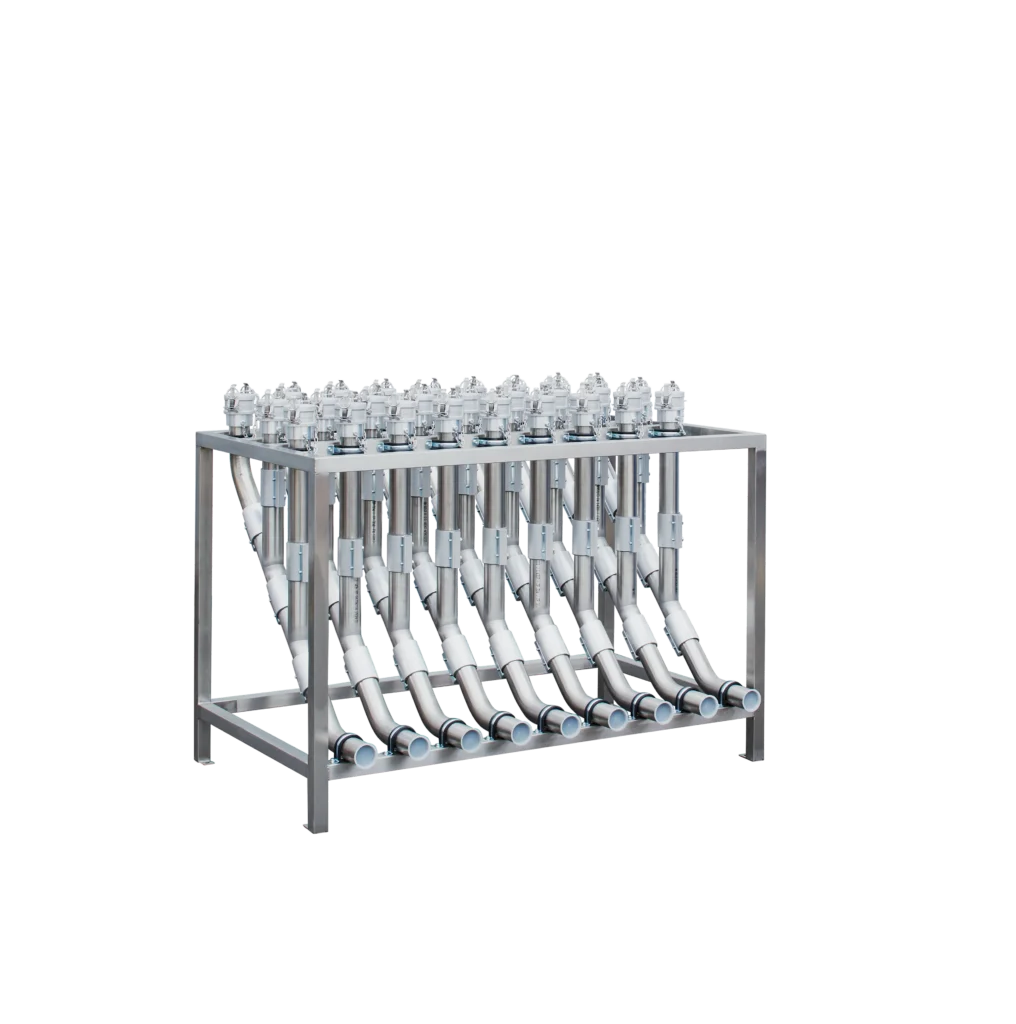
At APT Systems, we support these systems by supplying high-quality pipework, fittings, large-radius bends, and coupling stations that form the backbone of efficient pneumatic conveying and material transfer networks.
In this article, we explore how central material feed systems work and why they play such an important role in improving production efficiency.
What is a Central Material Feed System?
A central material feed system is an automated pneumatic conveying network used to transport bulk materials such as plastic pellets, powders, grains, or food ingredients from a central storage location to multiple processing machines.
Instead of each machine having its own individual material supply, a centralised system distributes material through a controlled pipeline network.
These systems typically consist of:
- Central material storage silos or bins
- Vacuum pumps or blowers
- Conveying pipework and fittings
- Coupling stations and distribution points
- Filters and separators
- Machine receivers
Materials are transported through the system using controlled air flow, allowing them to move quickly and reliably across long distances within a factory.
Why Manufacturers Are Moving to Central Feed Systems
As manufacturing facilities grow larger and more automated, manual material handling becomes inefficient and time-consuming.
Central feed systems provide several advantages compared with traditional manual or decentralised material supply methods.
Key operational benefits include:
- Improved production efficiency
- Reduced labour requirements
- Consistent material supply to machines
- Cleaner and safer production environments
- Better inventory control
- Reduced risk of contamination
These systems are now widely used in industries where production lines must run continuously without interruption.
Increased Production Efficiency
One of the biggest advantages of central material feed systems is the ability to keep production lines running consistently.
When materials are delivered automatically to each machine, operators no longer need to stop production to manually refill hoppers or move materials around the factory floor.
This leads to several efficiency improvements:
- Continuous material supply to multiple machines
- Reduced machine downtime caused by empty hoppers
- Faster production cycles
- Improved workflow across the facility
In high-volume production environments, even small interruptions can result in significant productivity losses. Automated material feeding helps eliminate these disruptions.
Even a small increase in velocity can exponentially increase wear.
In practical terms:
- Doubling velocity can more than double wear rate
- Abrasive materials (e.g., flour, cement, plastic pellets, grain) accelerate erosion
- Fine powders can behave like sandblasting media at high speeds
A larger bend radius reduces the severity of directional change, lowering impact intensity and distributing wear more evenly.
Reduced Manual Handling and Labour
Traditional material handling often requires operators to move bags, containers, or pallets of raw materials around the factory.
This process is not only inefficient but can also create health and safety risks.
Central feed systems help reduce manual handling by automatically transporting materials through pipework systems.
Benefits include:
- Less physical handling of materials
- Reduced risk of injury from lifting or repetitive tasks
- Lower labour costs
- More efficient use of staff across production areas
Operators can focus on monitoring machines and maintaining quality instead of transporting materials.
Consistent Material Flow and Process Stability
In many manufacturing processes, consistency is critical. Variations in material supply can lead to defects, poor product quality, or production interruptions.
A well-designed central feed system provides controlled and consistent material flow to each machine.
This helps maintain:
- Stable processing conditions
- Consistent material feed rates
- Improved product quality
- Reduced material waste
Maintaining steady material flow is especially important in industries such as plastics injection moulding and extrusion, where process stability directly impacts product performance.
Cleaner and Safer Production Environments
Central material feed systems also help create cleaner and more organised factory environments.
Manual material handling often leads to spills, dust generation, and cluttered production areas.
By transporting materials through sealed pipework systems, these issues can be significantly reduced.
Key environmental benefits include:
- Reduced dust and airborne particles
- Lower risk of material contamination
- Cleaner production floors
- Improved hygiene in food or pharmaceutical applications
This is particularly important in industries where product purity and hygiene standards must be maintained.
The Importance of Pipework Design in Central Feed Systems
While pumps and vacuum units receive much of the attention in material conveying systems, the pipework network itself plays a crucial role in system performance.
Poorly designed pipework can lead to problems such as:
- Material blockages
- Increased wear and abrasion
- Reduced conveying efficiency
- Higher energy consumption
To maintain reliable material flow, pipe systems must be carefully designed using the correct materials, bends, and connection points.
Key pipework considerations include:
- Pipe diameter and wall thickness
- Large-radius bends to reduce impact wear
- Smooth internal surfaces to minimise friction
- Secure and reliable couplings
- Strategic placement of distribution points
At APT Systems, we supply the pipework components that ensure central material feed systems operate efficiently and reliably.
The Role of Coupling Stations
Coupling stations play an important role in flexible material distribution systems.
These stations allow operators to connect and direct materials to specific machines or production lines, providing greater control over material flow.
Coupling stations can help manufacturers:
- Switch between different material sources
- Supply multiple machines from one system
- Adapt quickly to changing production requirements
- Maintain efficient material distribution
When combined with high-quality pipework and fittings, coupling stations help ensure smooth and controlled material handling throughout the facility.
Durability and Long-Term Reliability
Material conveying systems often operate continuously, which means components must withstand long-term wear and demanding conditions.
High-quality pipework and fittings help reduce maintenance requirements and extend system lifespan.
Durable conveying components provide:
- Resistance to abrasion and material impact
- Reduced wear in high-velocity conveying systems
- Long service life
- Lower maintenance costs
Using properly engineered pipework solutions ensures the entire conveying system remains reliable over time.
Supporting Efficient Central Material Feed Systems
As production facilities become more automated, central material feed systems will continue to play a vital role in improving manufacturing efficiency.
These systems help manufacturers:
- Increase productivity
- Reduce manual handling
- Maintain consistent material flow
- Improve workplace safety
Support scalable production growth
However, the success of these systems depends heavily on the quality of the pipework infrastructure that transports materials throughout the facility.
How APT Systems Supports Central Material Feed Systems
At APT Systems, we specialise in supplying the pipework and fittings used in pneumatic conveying and central material feed systems.
Our product range includes:
- Stainless steel and aluminium pipework
- Large-radius bends designed to reduce wear
- Pneumatic conveying fittings
- Coupling stations for flexible material distribution
By supplying durable, high-quality components, we help manufacturers build efficient and reliable material handling systems that support long-term production performance.

Central material feed systems are transforming how manufacturers manage raw materials across their production facilities.
By automating material transfer and centralising supply, these systems help reduce downtime, improve efficiency, and maintain consistent production performance.
While pumps and control systems are essential, the pipework, fittings, and coupling stations that transport materials are equally important to system reliability.
With the right components and design approach, manufacturers can build material handling systems that support productivity, scalability, and long-term operational efficiency.
APT Systems is proud to support these systems by supplying the pipework and fittings that keep materials moving efficiently across modern production environments.