How We Helped a Customer Extend Pipe Bend Life by 10x
A customer was replacing a critical pipe bend approximately every month due to severe wear. We helped identify a more suitable, highly wear-resistant stainless steel bend, and ten months later it is still running strong, already delivering a significant improvement in service life and reducing the need for repeated replacements.
From monthly bend replacements to ten months and still going strong
In pneumatic conveying systems, pipe bends are often among the first components to show signs of wear. As conveyed material changes direction, the bend can experience significantly more impact and abrasion than straight sections of pipe.
For one customer, this had become a recurring maintenance problem. A critical pipe bend was being replaced approximately every month, creating ongoing maintenance costs, downtime and the need for regular replacement parts.
Rather than simply supplying another standard replacement, we looked at the application and recommended a highly wear-resistant stainless steel bend designed for demanding abrasive conveying applications.
The result has been significant.
Ten months after the change, the bend is still in service and going strong.
Based on the customer’s previous monthly replacement cycle, that represents at least a 10x improvement in service life so far, with the potential for the solution to deliver 20x or more compared with a standard bend in the right application.
The Challenge: A Pipe Bend That Wasn't Lasting
The customer was operating a pneumatic conveying system where a particular bend was exposed to high levels of abrasion.
The problem wasn’t that the pipework was fundamentally unsuitable. The issue was that the standard bend was being subjected to repeated impact from the conveyed material, resulting in accelerated wear.
The maintenance pattern was becoming predictable:
- The bend would be installed.
- Abrasive material would gradually wear the inside of the bend.
- Wall thickness would reduce over time.
- The bend would eventually need replacing.
- The process would repeat roughly every month.
While replacing a bend might appear relatively straightforward, the true cost goes beyond the component itself.
Frequent replacements can involve:
- Maintenance labour
- Production downtime
- Access to the pipework
- Replacement part costs
- Engineering time
- Stocking additional spares
- Unplanned maintenance
- Disruption to production schedules
For a production environment, continually replacing the same pipe bend is rarely an ideal long-term solution.
The better question was:
Could we identify a bend specifically designed to withstand the abrasive conditions for longer?
Why Standard Pipe Bends Can Wear So Quickly
In a pneumatic conveying system, the conveyed material travels at velocity through the pipework.
When the material reaches a straight section, its direction remains relatively constant.
At a bend, however, everything changes.
The conveyed material has to change direction, creating additional interaction with the internal surface of the bend. Depending on the material, conveying velocity, bend radius and system configuration, this can create a concentrated wear zone.
The result can be particularly severe when conveying abrasive products.
Materials containing hard particles, glass fibres, mineral content or other abrasive components can progressively remove material from the inside wall of a conventional stainless steel bend.
Eventually, the wall becomes sufficiently thin that the bend needs to be replaced.
This is why simply replacing a worn bend with another identical bend can sometimes result in the same problem occurring again.
Looking Beyond a Standard Replacement
When APT Systems reviewed the customer’s requirements, the objective wasn’t simply to find another replacement bend.
We wanted to look at why the bend was failing and whether a more wear-resistant solution could provide a significantly longer service life.
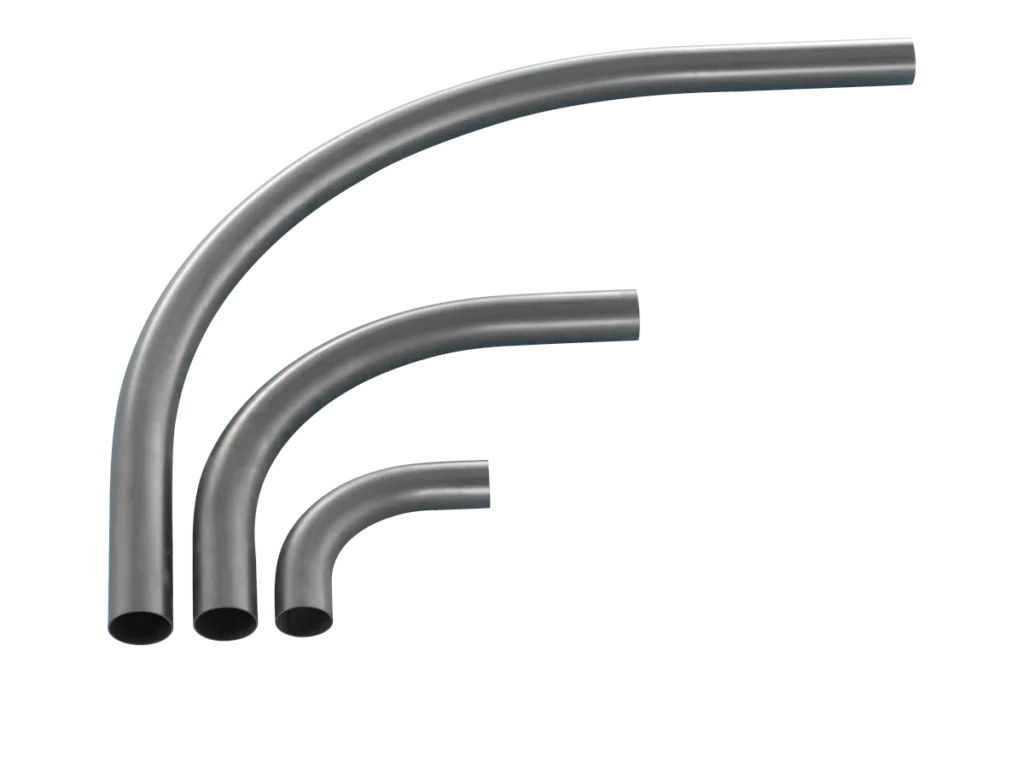
For applications where abrasion is a major concern, highly wear-resistant stainless steel bends can offer a substantial improvement over conventional pipe bends.
The solution we supplied was specifically designed for abrasive pneumatic conveying applications, providing a much greater resistance to internal wear.
This type of bend is particularly suited to applications where conventional bends are being replaced frequently because of abrasion.
What Makes a Wear-Resistant Bend Different?
Although both hose types are widely used in automotive applications, they perform very differently when exposed to ethanol-based fuels.
A highly wear-resistant bend is designed to withstand the demanding conditions created when abrasive material changes direction inside the conveying system.
The key benefit is simple:
The internal surface is much better suited to resisting progressive abrasive wear.
This can make a significant difference in applications where standard stainless steel bends have a relatively short operating life.
Rather than accepting monthly replacement as part of normal maintenance, a wear-resistant bend can potentially transform the maintenance cycle.
Depending on the material being conveyed and the operating conditions, highly wear-resistant bends can offer many times the service life of conventional bends.
That makes them particularly attractive where a specific bend has become a known wear point.
The Result: Ten Months and Still Going
This is where the customer’s experience really demonstrates the value of addressing the underlying wear problem.
Before the change, the customer was replacing the affected pipe bend approximately every month.
After switching to the highly wear-resistant solution:
10 months later – the bend is still running.
That means the customer has already achieved at least:
10 months ÷ 1 month = 10x longer service life
And importantly, the bend has not yet reached the end of its service life.
So, this isn’t a case of replacing a bend after ten months and then calculating the improvement.
The bend is still in operation.
The previous bend lasted around one month.
The new bend has already exceeded ten months.
That makes the improvement 10x and counting.
With highly wear-resistant bend technology capable of achieving substantially longer service life in suitable applications, there is also the potential to reach 20x or more compared with the original replacement cycle.
The Maintenance Benefits
The obvious benefit is fewer replacement bends.
But the impact can extend much further.
If a bend that previously required monthly replacement can operate for many months, the customer can reduce the frequency of maintenance interventions.
That can mean:
- Fewer production interruptions
- Reduced maintenance requirements
- Lower replacement-part consumption
- Less engineering time spent on repeat failures
- Reduced requirement for emergency spares
- Greater confidence in the conveying system
- Improved overall reliability
For a production facility, avoiding a recurring maintenance problem can be considerably more valuable than simply reducing the price of an individual component.
This is why the cheapest bend isn’t always the most cost-effective bend.
A standard bend that needs replacing every month can ultimately cost more than a higher-performance bend that lasts many times longer.
Choosing the Right Pipe Bend for Abrasive Conveying
Not every application requires a wear-resistant bend.
For many pneumatic conveying systems, conventional stainless steel pipework and large-radius bends can provide excellent performance.
However, there are certain warning signs that suggest it may be worth investigating a more wear-resistant solution.
For example:
- A bend is being replaced repeatedly.
- Wear is concentrated in a particular section of the system.
- The conveyed material is highly abrasive.
- The system operates continuously or for long production periods.
- Maintenance teams are regularly inspecting the same bends.
- A bend has become a recognised failure point.
- The cost of downtime is significantly higher than the cost of the replacement component.
In these situations, upgrading the specific wear point rather than replacing the entire conveying system can be a highly practical approach.
Large-Radius Design Still Matters
Wear resistance isn’t the only consideration when selecting a pipe bend.
Bend geometry remains important to pneumatic conveying performance.
Large-radius bends can help provide a smoother change in direction and can be beneficial when designing systems around product degradation, pressure drop and wear.
The correct radius, diameter, material and bend construction should therefore be considered together.
This is where understanding the application becomes important.
A wear-resistant bend isn’t simply a case of choosing the hardest or most expensive option available.
The correct solution depends on factors such as:
- Material being conveyed
- Particle size
- Abrasiveness
- Conveying velocity
- Pipe diameter
- Bend radius
- Operating hours
- System pressure
- Frequency of production
- Existing wear patterns
How APT Systems Helped
At APT Systems, our role isn’t to install pneumatic conveying systems.
We supply the pipework and fittings and provide technical support to help customers select the right components for their application.
In this case, that meant looking beyond the customer’s immediate requirement for another replacement bend.
Instead, we considered the recurring wear problem and identified a more suitable pipe bend solution for the application.
That approach can be particularly valuable when a customer is experiencing repeated component failures.
Rather than simply asking:
“What bend do you need?”
We can look at:
“Why is this bend failing, and is there a better solution?”
That difference can have a significant impact on long-term operating costs.
Could Your Pipe Bends Be Wearing Too Quickly?
If your maintenance team is regularly replacing the same pipe bends, it may be worth looking at the underlying cause rather than simply ordering another standard replacement.
A highly wear-resistant bend could potentially provide a substantially longer service life, particularly in abrasive pneumatic conveying applications.
At APT Systems, we can help you assess the requirements and recommend suitable stainless steel pipe bends, pipework and fittings for your system.
If you’re currently replacing bends every few weeks or months, we’d be happy to look at the application and see whether there is a more durable option.
From monthly replacements to ten months and still going.. sometimes the right bend can make all the difference.