

Long Radius vs Short Radius Bends: Which Should You Use?
When it comes to designing efficient and functional pipework systems, one of the most important decisions you’ll face is choosing between long radius (LR) and short radius (SR) bends. While both serve the same basic function, changing the direction of flow in a piping system, they each offer distinct advantages and disadvantages depending on the application.
In this guide, we’ll break down the key differences between long radius and short radius bends, explore their pros and cons, discuss typical applications, and help you decide which option is best suited for your project. Whether you’re a mechanical engineer, a plumber, or a DIY enthusiast, understanding the nuances of pipe bends can significantly impact the efficiency, cost, and performance of your system.
What Are Long Radius and Short Radius Bends?
Before diving into comparisons, let’s define the two:
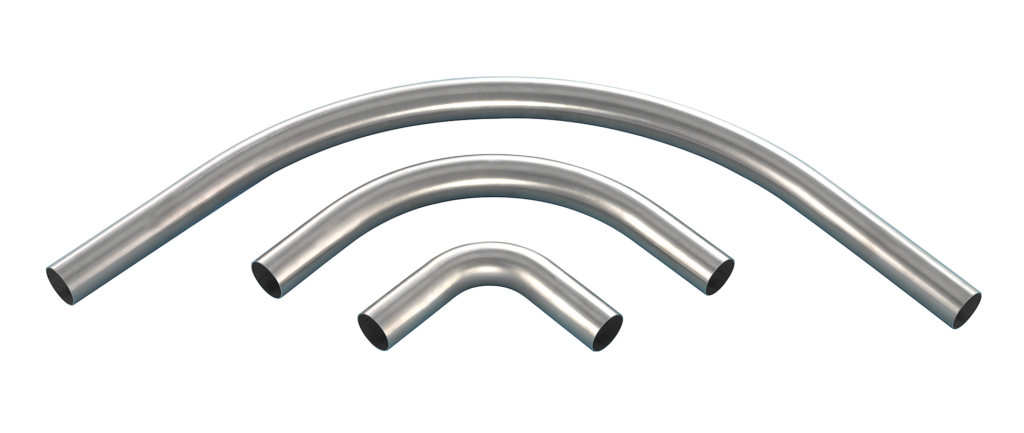
- Long Radius Bend (LR):
Typically has a centreline radius that is 1.5 times the nominal pipe diameter (1.5D). This creates a gentler curve and smoother change in flow direction. - Short Radius Bend (SR):
Has a centreline radius equal to the nominal pipe diameter (1D), resulting in a tighter curve and sharper directional change.
Pros and Cons
Long Radius Bends – Pros:
- Improved Flow Efficiency:
The gentle curve reduces turbulence and pressure drop, making it ideal for high-velocity flow. - Less Erosion & Noise:
Reduces the risk of erosion due to smoother flow transitions. Less vibration and noise in the system. - Better for Slurry & Abrasive Fluids:
Minimizes wear on the bend interior when used with abrasive or high-viscosity materials. - Stress Reduction:
Gentler turns reduce mechanical stress and strain on the pipe system.
Long Radius Bends – Cons:
- More Space Required:
The wider curve takes up more room, which can be problematic in compact installations. - Higher Cost:
Generally more expensive due to increased material usage and size.
Short Radius Bends – Pros:
- Space-Saving Design:
Ideal for tight spaces where layout constraints are a concern. - Lower Material Cost:
Uses less material and may be cheaper to manufacture and install. - Quicker Installation:
Shorter fitting means faster alignment and welding, especially in prefab setups.
Short Radius Bends – Cons:
- Higher Pressure Loss:
Tighter bend causes more turbulence and head loss. - Greater Risk of Erosion:
Especially in systems with fast-moving or abrasive fluids. - Increased Stress:
Sharp directional changes increase internal stress and potential vibration.
Applications
Choosing between a long or short radius bend depends heavily on the application, space constraints, and fluid type. Here’s a breakdown:
Industrial Applications (Refineries, Chemical Plants, etc.):
- Long Radius is preferred due to the need for smooth flow, especially with chemicals, steam, and high-temperature liquids.
- Short Radius may be used in compact skid-mounted systems or secondary piping.
Plumbing & HVAC Systems:
- Short Radius is commonly used in building services where space is tight, such as boiler rooms or underfloor plumbing.
- Long Radius may be found in ventilation ducting or water main changes in direction.
Marine & Offshore Installations:
- Short Radius bends are often used due to space and weight limitations.
- But long radius is chosen when minimizing vibration and flow resistance is critical.
Automotive and Engine Systems:
- Short Radius bends are common in turbochargers and exhaust manifolds where space is limited.
- Long Radius is sometimes used in aftermarket upgrades to improve airflow.
Flow Efficiency and Pressure Drop Considerations
Flow dynamics are at the heart of choosing the right bend. Here’s how LR and SR compare:
Feature | Long Radius Bend | Short Radius Bend |
Pressure Drop | Lower | Higher |
Turbulence | Minimal | Higher |
Flow Uniformity | Better | Less uniform |
Vibration | Lower risk | Higher due to turbulence |
Suitable for Slurry? | Yes | Not ideal |
If your system is flow-sensitive (e.g. chemical dosing lines, high-velocity water supply), long radius bends are almost always the better choice. If space and budget are bigger concerns than flow characteristics, short radius bends may be the way to go.
Space and Design Considerations
When laying out a pipe system, dimensions and space play a crucial role. A short radius bend can reduce the footprint of your design by several inches or even feet, depending on pipe size. However, this must be weighed against the increased complexity of managing pressure losses and potential erosion.
For engineers and designers working with CAD or BIM systems, make sure to check the manufacturer’s radius specifications and account for centre-to-end dimensions when calculating pipe runs and supports.
Why PTFE Hoses Are Worth It
Selecting between long radius (LR) and short radius (SR) bends is a key decision in any piping or fluid transport design. While both redirect flow, they differ significantly in how they affect efficiency, space usage, cost, and system durability.
Ultimately, the right choice depends on your project’s priorities:
Choose Long Radius for smooth flow, minimal vibration, and reduced wear.
Choose Short Radius when space and cost are your main constraints.