Selecting the Right Pipe Material for Pneumatic Conveying: Stainless Steel, Aluminium or Glass
Selecting the correct pipe material is one of the most critical decisions in the design and performance of a pneumatic conveying system. While fans, blowers, and filters often receive significant attention, the pipework itself plays a decisive role in system efficiency, wear life, product integrity, hygiene compliance, and long-term operating costs.
In this blog, we explore the advantages, limitations, and ideal applications of the three most commonly specified pipe materials in pneumatic conveying systems: stainless steel, aluminium, and glass. Understanding where each material performs best will help engineers, contractors, and plant managers make informed decisions that reduce risk and improve system reliability.
Why Pipe Material Selection Matters in Pneumatic Conveying
Pneumatic conveying systems move powders, granules, and particulate materials at high velocities. As material travels through bends, transitions, and vertical rises, the pipe material directly influences:
- Wear resistance and system lifespan
- Pressure loss and energy consumption
- Product degradation and breakage
- Hygiene and contamination risk
- Compliance with industry and regulatory standards
Choosing the wrong pipe material can lead to excessive wear, blocked lines, product damage, unplanned downtime, and costly system modifications.
Stainless Steel Pipework for Pneumatic Conveying
Stainless steel is one of the most widely used materials in pneumatic conveying, particularly in industries where hygiene, corrosion resistance, and durability are critical.
Key Benefits
- Excellent corrosion resistance, even in humid or aggressive environments
- Smooth internal bore, supporting efficient material flow
- High mechanical strength, suitable for high-pressure systems
- Hygienic and easy to clean, ideal for food and pharmaceutical applications
- Long service life, even under continuous operation
Typical Applications
- Food and beverage manufacturing
- Pharmaceutical and nutraceutical processing
- Chemical and mineral industries
- Applications requiring wash-down or CIP procedures
Considerations
- Higher material cost compared to aluminium
- Heavier than alternative materials, requiring robust support structures
Stainless steel is often the default choice where compliance, durability, and long-term reliability outweigh initial capital cost.
Aluminium Pipework for Pneumatic Conveying
Aluminium pipework offers a lightweight and cost-effective alternative to stainless steel, making it popular in many industrial conveying applications.
Key Benefits
- Lightweight, simplifying installation and support requirements
- Good corrosion resistance in dry conveying environments
- Lower cost compared to stainless steel
- Smooth internal surface, aiding efficient flow
- Easy to modify, supporting flexible system layouts
Typical Applications
- Plastics processing and pellet conveying
- Milling and grinding systems
- General industrial bulk handling
- Applications with non-corrosive materials
Considerations
- Reduced wear resistance compared to stainless steel
- Not suitable for highly abrasive or corrosive products
- Limited suitability for hygienic or wash-down environments
Aluminium pipework is an excellent choice where weight, cost efficiency, and ease of handling are priorities, and material abrasiveness is moderate.
Glass Pipework for Pneumatic Conveying
Glass pipework is a specialist solution used in applications where visual inspection, high purity, or product monitoring is required.
Key Benefits
- Exceptional internal smoothness, reducing friction and build-up
- Complete visual transparency, allowing real-time flow monitoring
- High chemical resistance, suitable for aggressive materials
- Non-reactive surface, supporting high-purity applications
- Reduced product adhesion, improving cleanability
Typical Applications
- Pharmaceutical and high-purity processes
- Food applications requiring visual inspection
- Laboratory and pilot plant systems
- Systems conveying fine powders prone to build-up
Considerations
- More fragile than metal pipework
- Requires careful handling and appropriate support
- Typically used selectively rather than throughout entire systems
Glass pipework is often specified strategically in sections where monitoring, validation, or contamination control is critical.
Comparing Stainless Steel, Aluminium and Glass Pipework
When selecting pipe material, it is essential to balance performance requirements against operational risks and budget constraints.
Material Comparison At A Glance:
- Stainless Steel
- Best for hygiene, durability, and corrosion resistance
- Ideal for food, pharma, and chemical industries
- Aluminium
- Lightweight and cost-effective
- Well suited to plastics and general industrial conveying
- Glass
- Transparent and chemically inert
- Ideal for high-purity and inspection-critical applications
In many systems, a combination of materials is used to optimise performance and cost. For example, stainless steel for bends and impact zones, aluminium for straight runs, and glass sections for inspection points.
The Importance of Bends, Radii, and Wall Thickness
Material choice should never be considered in isolation. Pipe bend radius, wall thickness, and system velocity have a significant impact on wear rates and product integrity.
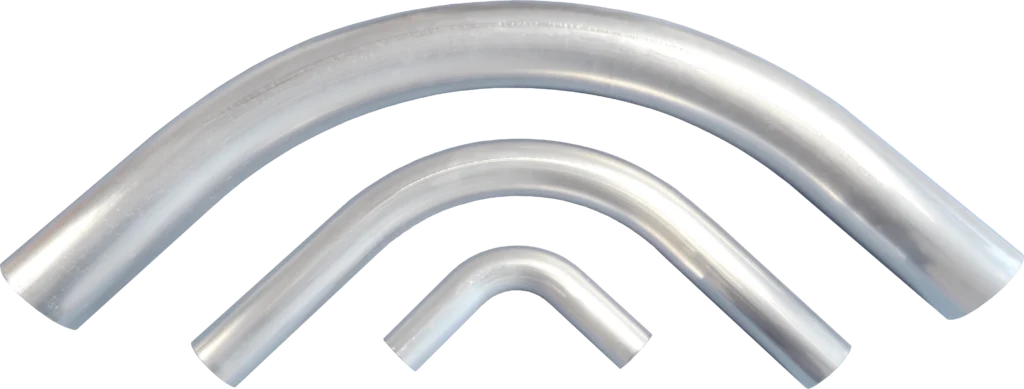
- Large-radius bends reduce impact velocity and wear
- Thicker wall sections extend service life in abrasive applications
- Correct material selection at high-wear points prevents premature failure
This is where early technical consultation can significantly improve system outcomes.
How APT Systems Supports Pipe Material Selection
APT Systems (Advanced Pressure Transfer Systems) works closely with customers to support the technical specification and supply of pneumatic conveying pipework and fittings.
We can supply stainless steel, aluminium, and glass pipework, including:
- Large-radius bends
- Straight tubes
- Compression couplings and fittings
- High wear-resistant components
By providing technical advice during the quotation and specification stages, APT Systems helps ensure that pipe materials are correctly selected for the application, reducing wear, improving performance, and avoiding costly redesigns later in the project.
While we do not carry out installation, our expertise supports contractors, engineers, and system integrators in delivering reliable and compliant pneumatic conveying systems.
Making the Right Material Choice
Selecting the right pipe material is fundamental to the success of any pneumatic conveying system. Stainless steel, aluminium, and glass each offer distinct advantages, and the correct choice depends on factors such as material characteristics, operating environment, hygiene requirements, and system design.
By understanding the strengths and limitations of each material, and by engaging with experienced technical suppliers early in the process, project teams can significantly improve system efficiency, longevity, and overall performance.
APT Systems is proud to support pneumatic conveying projects by supplying all three pipe materials, backed by expert technical guidance and reliable supply.